
How to Organise a Group Trip to Greece? Flights, Accommodation & Activities
Planning a group trip to Greece for a wedding, celebration or family reunion? A practical guide to flights, accommodation, payments, transfers, activities and managing a larger group.
PRIVATE EVENTS
ELEMENTS COMPANY

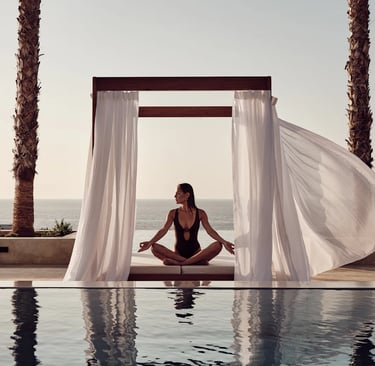
Travelling to Greece as a couple or one family is relatively straightforward. Once you start organising a trip for a larger group of friends, relatives or wedding guests, the planning becomes a completely different task.
You might be coming to Greece for a destination wedding, a birthday, anniversary, family gathering, holiday with friends or another private celebration.
Suddenly, you are not just booking flights and accommodation. You need to coordinate dates, arrivals, payments, transfers, rooms, activities, meals and communication with a much larger number of people.
And for most larger group trips, logistics quickly become the most challenging part.
Start with the basic details of the trip
Before booking flights or looking for accommodation, agree on the basic framework:
approximate number of people,
dates and number of nights,
where everyone is travelling from,
who is paying for what,
what type of accommodation you want,
whether you want shared activities,
and your approximate budget.
You do not need to decide every detail immediately.
The earlier you agree on the basics, the easier everything else becomes.
1. Getting everyone to the destination is often the hardest part
For a larger group, getting everyone to Greece is usually the first major logistical challenge.
Whenever possible, it helps if as many people as possible travel together.
If most of the group arrives on the same flight, you can:
arrange one airport transfer,
reduce the transport cost per person,
organise arrivals and hotel check-in more easily,
and avoid managing multiple transfers throughout the day.
If people are travelling from different cities or countries, it can make sense to divide them into smaller travel groups.
Instead of 30 completely separate arrivals, for example, you might have three groups of around ten people.
That is much easier to manage.
2. Consider group flights
Some airlines offer group bookings once you reach a certain number of passengers.
The main benefit is not always a lower fare.
Group bookings can also offer:
reserved capacity for the group,
more flexibility around passenger names,
certain changes before ticketing,
and simpler management of the overall reservation.
If your guests are travelling from different countries or airports, you can also organise separate group bookings for each departure point.
For a larger private trip, it is worth comparing a group booking with individual tickets rather than assuming one option will always be cheaper.
3. “Yes, I’m coming” is not a confirmed booking
This is one of the most useful lessons when organising group travel.
People may say months in advance that they are definitely coming.
Then work changes, family circumstances change, flight prices increase or other plans get in the way.
It is therefore a good idea to set:
a clear confirmation deadline,
a deposit or first payment,
and clear cancellation terms.
Treat a guest as confirmed once they have actually secured their place with payment.
Otherwise, you can easily find yourself reserving accommodation, transfers and activities for 30 people only to discover later that 22 are actually travelling.
4. How should payments work for a larger private group?
There are several ways to structure payments.
One organiser pays for everything
One person or family pays for the shared services and then collects each participant’s share.
This is simple for suppliers, but it creates a lot of administration for the organiser.
Each guest pays their share through the agency
If a travel or event agency is organising the trip, it can also manage the payment process.
Individual guests can receive their own payment instructions while the agency manages the bookings and supplier payments.
The main organiser no longer has to spend weeks checking who has paid and who still needs to be reminded.
Guests pay some suppliers directly
Hotels can often reserve a room block for the group and provide a dedicated booking link.
Guests can then choose and pay for their own room directly with the hotel while remaining part of the same group reservation.
Depending on the trip, individually paid and centrally paid services can also be combined.
5. Hotel or villa?
Accommodation is one of the biggest decisions.
Both options work well, but for different types of group trips.
Hotel
A hotel is often the easier option if you want:
breakfast and other meals on site,
housekeeping,
reception services,
guests to have more independence,
or more privacy between different members of the group.
Hotels work particularly well for destination weddings in Greece, where guests may spend part of the trip independently and come together for the wedding, group dinners or organised activities.
Villa or villa complex
Villas can be a much better fit when the main goal is to spend a lot of time together as a group.
For example:
a family reunion,
a birthday trip,
an anniversary,
or a holiday with a larger group of friends.
You may have your own garden, pool, terrace and shared spaces exclusively for your group.
The whole stay feels much more like one shared experience.
The trade-off is that villas often provide less service than a hotel.
That can be solved with:
regular housekeeping,
catering,
a private chef,
or delivered meals with service and clean-up included.
With the right setup, a villa can work almost like a private resort for your group.
6. The number of guests is not the number of rooms
You also need to understand the actual rooming requirements.
Your group may include:
couples,
families with children,
solo travellers,
friends happy to share,
and people who want their own room.
So it is not enough to know how many guests are travelling.
You need to know how many rooms you actually need and which room types.
This can significantly affect both the price and the choice of hotel or villa complex.
7. Use technology so you do not have to manage every request manually
With a few dozen people, individual requests start adding up very quickly.
Someone arrives on a different flight.
Someone wants a private room.
Someone has an allergy.
Someone wants to rent a car.
Someone wants to join an excursion while someone else does not.
If one organiser collects all of this through separate messages and emails, things can become chaotic very quickly.
Technology can make the process much easier.
For example, you can create one registration form where every guest provides:
contact details,
arrival and departure information,
accommodation preferences,
dietary requirements,
interest in optional activities,
transfer requirements,
and any other individual requests.
All of the information then sits in one place instead of being scattered across dozens of conversations.
It also helps to create one central source of information for the whole group.
This could be a simple website or dedicated trip page containing:
flights,
transfers,
accommodation,
programme,
addresses,
contacts,
recommendations,
updates,
and registration for optional activities.
For quick communication during the trip, a WhatsApp group or announcement channel can work well, especially if important updates are kept separate from general chat.
The same central space can also be useful during and after the trip — for example, for sharing photos and videos with the whole group.
If an agency is organising the trip, it can also manage guest communication and act as the main contact before arrival and throughout the stay.
8. Use shared transfers for the group and rental cars for smaller groups
If everyone is travelling together, a minibus or coach is usually the simplest option.
It is much easier than trying to coordinate ten separate cars that all need to arrive at the same place, park and wait for one another.
Rental cars can still make sense:
for individual families,
for smaller subgroups,
on free days,
or for guests who want to explore independently.
Car rental is also worth arranging in advance, particularly during the high season.
9. Do not schedule every minute
For most private group trips, the best balance is usually:
a few shared highlights combined with enough free time.
The group programme might include:
a boat trip,
a shared dinner,
a day at the beach,
a food or wine experience,
a visit to a local producer,
a workshop,
a day trip,
or a private celebration.
One experience we have organised, for example, combined a visit to an olive oil producer and museum with a workshop where guests made their own olive oil soap.
Local experiences like these are often more memorable than a standard tourist itinerary.
10. Check interest before booking optional activities
Not everyone will want to join every activity.
Someone may be tired. Someone may prefer to stay by the pool. Someone else may only decide once they arrive.
For activities that need to be booked in advance, it usually works best to:
check initial interest,
set a confirmation deadline,
confirm the final number through a booking or payment.
With a larger group, you do not want to reserve a boat for 30 people simply because 30 people said “probably” two months earlier.
11. Reserve the key parts of the programme in advance
Finding a restaurant for six people at the last minute is often possible.
Finding one for 35 people is very different.
The same applies to:
boats,
larger transfers,
private venues,
catering,
workshops,
and other group activities.
For a larger group, we recommend booking the main parts of the programme before arrival.
Free time can still remain flexible.
12. Local knowledge matters much more with a larger group
The internet and AI can give you hundreds of recommendations for restaurants, beaches and things to do in Greece.
But that is not the same as knowing:
which restaurant can genuinely handle 30 guests well,
which beach is practical for a larger group,
where a coach can actually stop,
which boat operator is reliable,
which activity makes sense in the current weather,
or which supplier can react quickly when plans change.
That kind of practical local knowledge is still difficult to replace.
If you want one partner who understands the destination and can connect travel, accommodation, activities and local coordination, ELEMENTS COMPANY can take care of everything around your trip in Greece.
13. Always have a Plan B
Weather can cancel a boat trip.
Someone changes their arrival time.
The hotel makes a mistake with a room.
A restaurant changes the conditions.
With a larger group, something unexpected will almost always happen.
And this is where having one local partner you can simply call makes a major difference.
An agency can:
solve an issue with the hotel,
find an alternative activity,
arrange a taxi or rental car,
help with medical assistance,
change a transfer,
or advise on practical issues during the stay.
Instead of spending half your holiday solving problems for everyone else, you have someone there to help.
Should you organise a group trip yourself or use an agency?
Both options are possible.
If the group is smaller, the programme is simple and you have plenty of time, organising much of the trip yourself can work perfectly well.
But as the group grows, the workload grows very quickly too.
You need to manage:
flights,
guest lists,
payments,
hotels or villas,
room allocation,
airport transfers,
local transport,
meals,
activities,
bookings,
guest communication,
changes,
and coordination during the trip itself.
And then there is one important question:
Do you want to spend the trip as the organiser, or as one of the guests?
If you are celebrating a birthday, family reunion or anniversary — or travelling to Greece for a wedding — you are probably coming because you want to spend time with the people around you.
Not because you want to spend the day checking transfers, answering guest questions and calling the hotel.
What does a local agency add?
You do not have to research everything yourself
A local agency already knows the destination, hotels, villas, transport companies, restaurants and activity providers.
You do not need to spend several evenings researching everything from scratch.
It can negotiate group conditions
Hotels, transfers, excursions and other suppliers may offer group rates or special conditions.
An agency knows where these are possible and how to negotiate them.
It can manage payments and bookings
Instead of the main organiser chasing every guest for payment, the process can be managed through the agency.
It can communicate directly with guests
The agency can become the main contact for the group and handle questions about arrivals, accommodation, transport or individual requests.
It knows what works in practice
You do not have to work out from scratch how to split airport transfers, where to accommodate 30 people or which activities work well for a mixed group.
An experienced agency has dealt with similar situations before and can build the trip around proven solutions.
It is already in the destination
If something changes, you have someone who knows the local environment, communicates with local suppliers and can solve the issue quickly.
Is travelling through an agency more expensive?
An agency needs to be paid for its work.
But that does not automatically mean the overall trip will be significantly more expensive.
Local market knowledge, group conditions, trusted suppliers and previous experience can also help reduce costs in certain areas.
More importantly, you are paying for something that is difficult to see in the price of an individual hotel room or airport transfer:
time, convenience, confidence and the ability to actually enjoy the trip yourself.
For a larger group, that can be the biggest value of all.
Planning a group trip or private event in Greece?
Whether you are coming for a destination wedding, birthday, anniversary, family reunion or a holiday with a larger group of friends, you do not have to organise everything yourself.
We can help with flights, accommodation, transfers, payments, guest communication, activities and coordination throughout your stay in Greece.
You come to Greece for the people you want to spend time with. We take care of everything around it.
